
Understanding traffic and transport risks in onshore wind projects
by Charlie Seventekin, Ian Cronshaw
View post

New Zealand's planning system is undergoing its most significant reform in decades.
The proposed replacement of the Resource Management Act (RMA) with the Planning Act and Natural Environment Act signals a shift towards a planning framework intended to enable growth and development while continuing to manage environmental outcomes. The Planning Act will focus on land use, development and infrastructure, while the Natural Environment Act will address the management and protection of natural values.
Alongside these legislative changes, the new system introduces greater reliance on national instruments and regional spatial plans, which are implemented through new local-level plans. Together, these reforms are intended to create a planning system that is more consistent, predictable and streamlined than the framework it replaces.
For organisations involved in infrastructure, development, housing, industry and investment, the implications extend well beyond legislative change. The reforms alter where key decisions may be made, how planning priorities are established and how future growth is expected to occur.
One of the most significant shifts is the growing importance of national direction.
Under the proposed framework, legislative goals will be translated into national policy direction and national standards. These national standards are expected to influence plan content and planning processes across New Zealand, creating a much greater level of consistency than currently exists under the RMA.
This represents a fundamental change in where planning decisions are shaped.
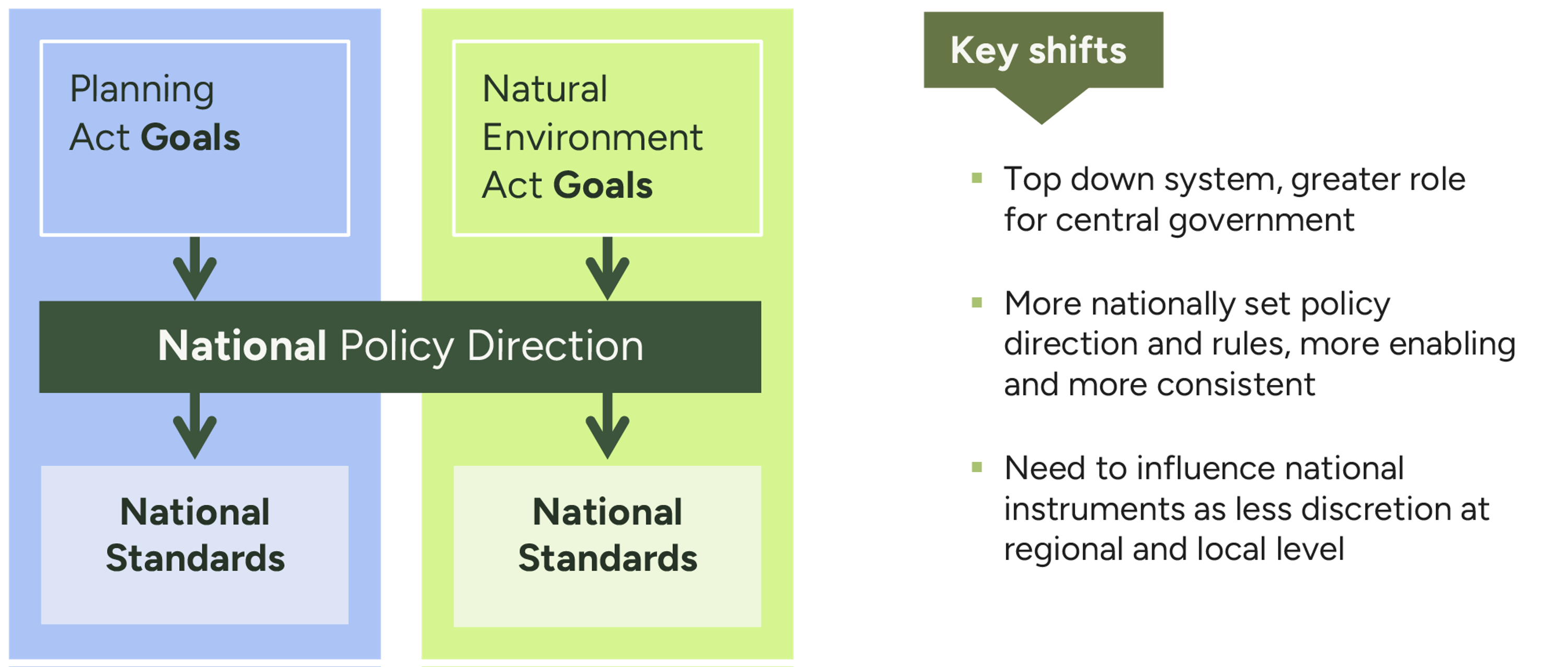
Many matters that have traditionally been debated through district and regional plans may increasingly be addressed through the national instruments. The intention is to reduce duplication, improve consistency and provide greater certainty for organisations operating across multiple regions.
The trade-off is that local authorities are expected to have less discretion to develop bespoke planning approaches. While councils will retain some ability to respond to local circumstances, planning frameworks, zones, definitions and rules are expected to become increasingly standardised by central government at the national level.
It means national instruments will matter more than ever. Many of the most important decisions about planning outcomes will increasingly be made at the national level.
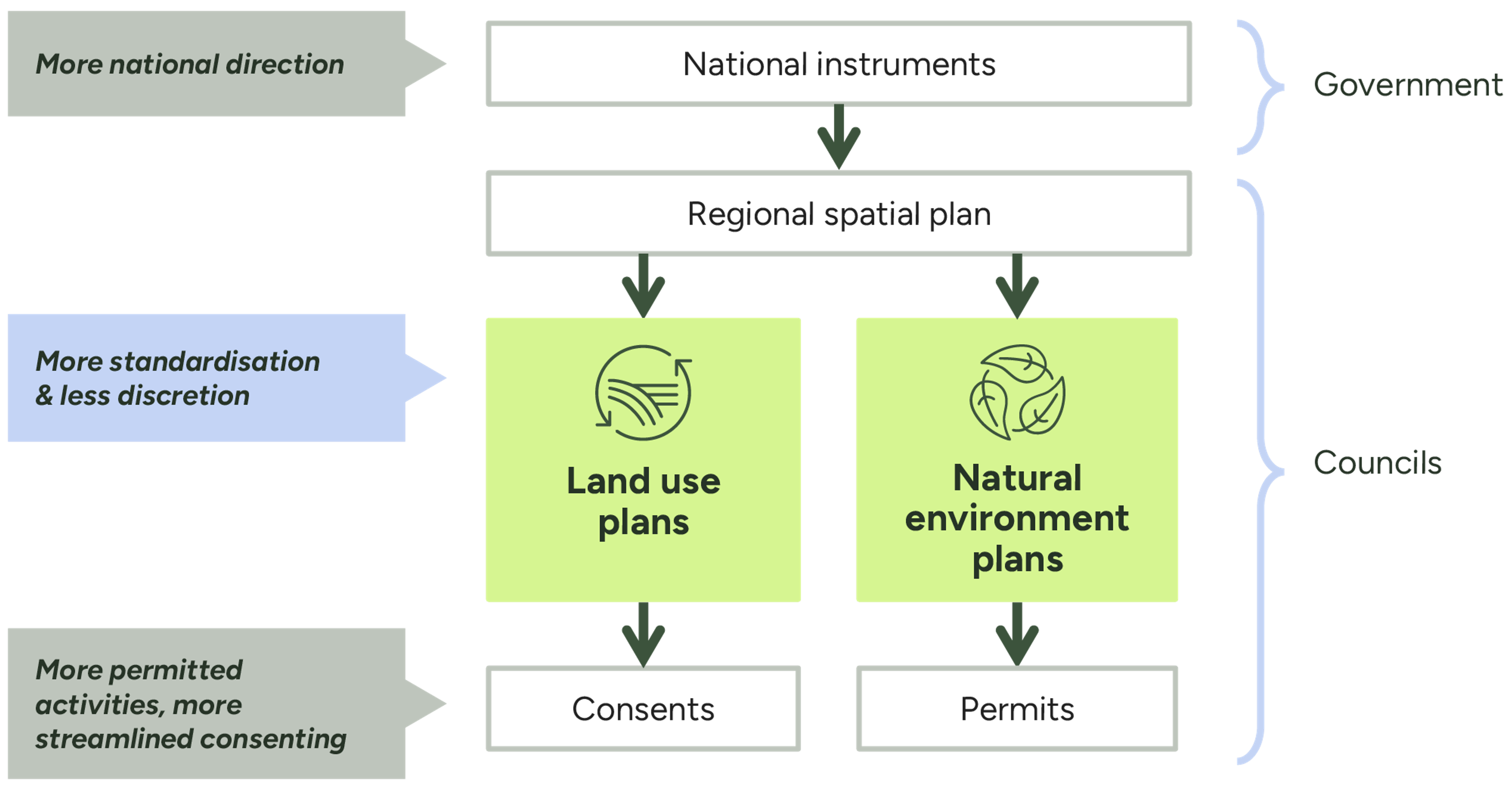
Regional spatial plans are intended to bring together growth, infrastructure and environmental considerations into a single long-term regional strategy. Their purpose is to identify where growth should occur, where major infrastructure is required and where environmental or natural hazard constraints may influence future development.
Importantly, these plans are expected to influence a wide range of future decisions, including land use plans, natural environment plans, council infrastructure programmes and, potentially, aspects of government investment.
For those making long-term development investment decisions, the significance of these plans should not be underestimated. They will be the primary strategic instrument guiding where growth, infrastructure investment and development will occur across each region. In doing so, they are likely to provide some of the clearest signals about future opportunities, investment priorities and the locations where development is most likely to be supported.
The reforms also seek to create a more enabling approach to development approvals.
More activities are expected to be permitted, while planning consents and natural resource permits will focus increasingly on activities that generate genuinely significant impacts on people, communities or the environment. Notification thresholds are proposed to be higher, and some effects will be excluded from consideration under the new framework.
The transition to the new system will take time and is not expected to be fully implemented for approximately 4.5 years.
During this period, the existing planning framework will remain in place while new plans, standards and instruments are progressively developed. The resource consent process under the RMA will continue to operate, although elements of the assessment framework will gradually evolve over time to reflect new national rules as they come into effect. Some changes to the resource consents process will be introduced very soon, with certain provisions taking effect within a month of the new legislation receiving Royal Assent.
The transition period creates a risk of investing in the wrong place, pursuing the wrong consent pathway, or designing projects that are out of step with emerging planning priorities. While some projects may benefit from moving quickly under the existing framework, others may be better positioned to wait until aspects of the new system come into effect. The challenge for proponents will be understanding which approach creates the greatest value and minimises future costs, delays and consenting risk.
The reforms aim to deliver a more consistent and enabling planning system. However, the scale of change involved is substantial.
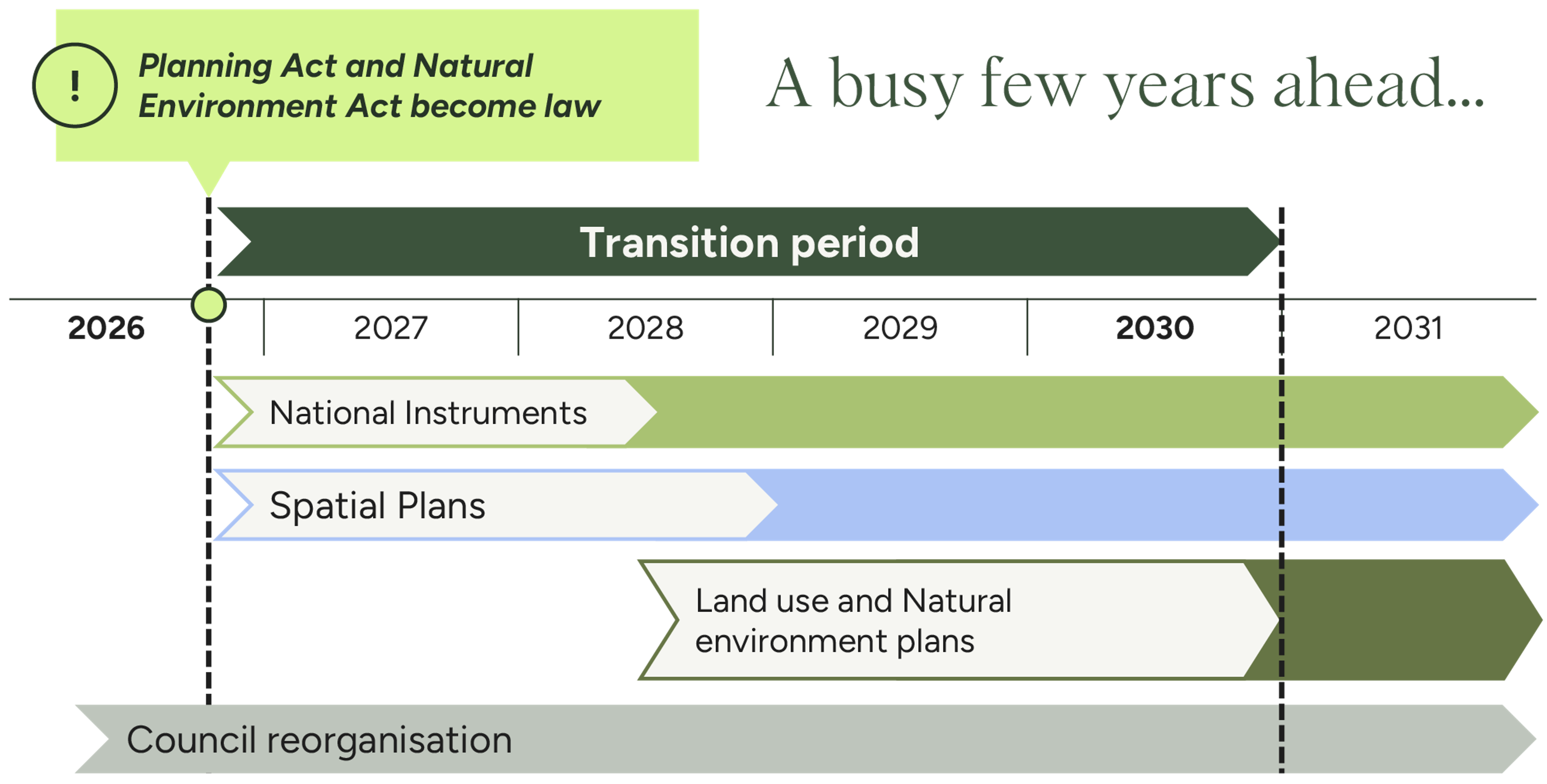
Over the coming years, New Zealand will see the introduction of new legislation, new national policy direction, national standards, regional spatial plans, land use plans, natural environment plans and environmental limits. These changes will be developed while existing planning processes continue to operate.
Successfully implementing this new system will require significant effort across government, local authorities, industry and the planning profession.
What appears increasingly clear is that organisations that remain informed, understand where decisions are being made and engage early in emerging planning processes will be better positioned to respond as the system develops.
While many aspects of the new system are emerging, several practical considerations are already becoming clear:
New Zealand's planning reforms represent more than a legislative update. They signal a broader shift in how growth, infrastructure and environmental outcomes are planned and coordinated.
These themes emerged through SLR's Making Sustainability Happen: Live series, which brings together industry experts, practitioners and stakeholders to explore practical sustainability challenges and opportunities.
Our planners are uniquely placed to help organisations navigate these changes, leveraging our experience across the full planning system, from directly working on the reforms, national to local policy development, through to resource consenting and implementation. Combined with our in-house multidisciplinary technical capabilities, this breadth of experience enables us to give organisations practical advice that responds to local challenges, unlocks opportunities and supports better outcomes.
Reach out to our team to discuss the reforms and how we can best help you today.
Contact Us