Understanding traffic and transport risks in onshore wind projects
by Charlie Seventekin, Ian Cronshaw
View post
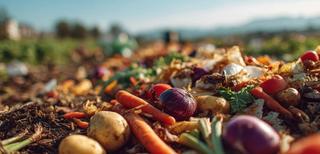
From 1 July 2026, the NSW Government requires certain businesses, including supermarkets, cafes, schools and hotels, to source-separate food and garden waste. Under the new legislation, supermarkets will also be required to report on the donation of surplus food to food charities.
The new laws are part of the NSW Government's commitment to halve the amount of organic waste, including food waste, sent to landfill to achieve net zero emissions from organic waste in landfill by 2030.
Start dates will be staggered based on garbage bin capacity however, businesses required to separate food waste from 1 July 2026 include:
From 1 July 2026
Applies to premises with residual waste capacity greater than six 660 L bins, 16 x 240 L bins or any combination of bins of more than 3,960 L
From July 2028
Applies to premises with residual waste capacity greater than three 660L bins, 8 x 240L bins or any combination of bins more than 1,980 L
From July 2030
Applies to premises with residual waste capacity greater than 660 litres in a single bin, or three 240-litre bins, or 720 litres in total for any combination of bins.
In a building complex with tenants, the responsibility for arranging food waste separation will be with whoever oversees the waste collection service. Most likely, this will be the building owner or manager. It will not be the responsibility of the individual tenants. The building manager will need to ensure that there are enough bins for food waste, and that organic and non-organic waste are not mixed during transportation.
Penalties for non-compliance may include fines for both corporations and individuals, with additional penalties applying for continuing offences.
Local councils will monitor and enforce business compliance, while the Environmental Protection Authority will monitor and enforce state and public authority compliance. The EPA may grant part or full exemptions.
From 1 July 2026, larger supermarkets must keep weight records of certain food types donated for human consumption each month and the organisation to which it was donated.
Food types to be included are:
The records must be:
The EPA may publish the records and grant exemptions.
To comply with the requirements, facility operators will need to provide bins for separated food waste, which will likely be obtained from the waste contractor. They will also need to identify and allocate space for the storage of separated food waste. Staff will need to be adequately trained to identify and separate food appropriately, and a new or existing contractor will need to arrange the collection of separated waste.
Food waste must be taken into account when calculating waste quantities and determining which waste streams need to be collected. More space may need to be allowed in certain new commercial developments to accommodate separated food waste.
Specifications, or the absence of them, in council development control plans and waste guidelines will be overridden by this NSW Government requirement.
Having prepared hundreds of waste management plans across a wide range of sectors, our consultants are well placed to support clients in understanding emerging regulatory requirements and incorporating them into project planning and design. The separation of food waste is just one of many considerations within the increasingly complex requirements specified by local and state authorities for new developments. Our team can provide practical advice to help navigate these requirements and achieve successful project outcomes.