
Understanding traffic and transport risks in onshore wind projects
by Charlie Seventekin, Ian Cronshaw
View post
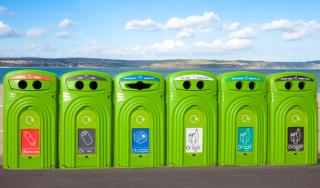
The UK is undergoing one of the most significant periods of waste and recycling reform in decades, and local authorities are under increasing pressure to keep pace. Many councils are facing significant challenges in meeting their statutory requirements, with financial pressure remaining a persistent concern.
The end of March 2026 marked the launch of mandatory weekly food waste collections for all households. However, a report by the BBC earlier this year found that around a quarter of English councils would not meet the deadline, citing vehicle shortages and uncertainty around long‑term revenue funding as the main reasons for delay [1]. While the UK government has allocated new burdens funding to support transition costs, councils are still awaiting essential details on future ongoing financial support.
From March 2027, councils will also be required to collect flexible plastic packaging as part of the recycling stream and will need to work with their materials recovery facilities (MRFs) to identify preferred collection methods. Handling, processing, and sorting flexible plastics at MRFs is likely to require either additional manual intervention or site upgrades, meaning investment will be necessary to enable MRFs to accept these materials. The impact of these additional costs on customers, including local authorities, is currently unknown, and councils should prepare for changes to revenue streams, particularly once Deposit Return Schemes are introduced and the composition and quality of kerbside recycling fundamentally change.
The introduction of the packaging extended producer responsibility (pEPR) scheme is meanwhile entering year two later this year. Under this scheme, revenue will be distributed by PackUK to cover the net efficient costs of collecting and managing packaging waste, funded through producer levies. This provides an important new funding stream for councils. However, from 2028, local authorities will need to demonstrate that their collection systems meet the criteria for efficiency and effectiveness. Failure to do so could result in funding being reduced by up to 20%, meaning performance improvement will be a financial imperative for councils moving forward.
Further financial pressure is expected from 2028, when the UK Emissions Trading Scheme (ETS) expands to include energy‑from‑waste (EfW) facilities. This shift is likely to drive up disposal costs significantly unless councils can reduce the volume of fossil‑based materials, particularly plastics and textiles, sent for incineration. For many authorities, this will require substantial service redesign and renewed efforts to influence household and commercial waste behaviours.
These reforms mean the next few years will be critical. Councils must not only respond to immediate deadlines but also prepare for a very different funding, regulatory, and operational environment. With this in mind, developing a clear, evidence‑based waste strategy is essential.
SLR can support local authorities in assessing their options, understanding the implications of upcoming legislation, and planning the next steps to ensure compliance, efficiency, and financial resilience. The following outlines the recommended next steps:
The foundation of a robust waste strategy is a clear, evidence‑based understanding of service performance. This includes analysis of collections data, tonnages, participation rates, contamination trends, operational efficiency, and customer feedback. A waste compositional analysis can identify what materials make up the council’s bins and, therefore, which items could be better targeted for recycling.
The objective is to understand how the service is currently performing, where pressures or inefficiencies exist, and what dependencies influence service quality (e.g. contractor performance, treatment facility constraints, and resident behaviours).
Once the current picture is understood, the next step is to explore what a ‘good’ service looks like and assess how far the council is from achieving its strategic goals.
Key areas for focus include:
Using insights from the data review and gap analysis, a list of potential improvement options can be developed.
The process should:
Once actions have been identified, the next step is to build a clear and comprehensive business case to secure internal buy‑in and funding.
A strong business case will:
The business case will transform strategic ambitions into a credible, fundable, and actionable plan.
SLR supports local authorities in navigating waste and recycling reform through clear, evidence‑led advice. We help councils understand the implications of new legislation, funding mechanisms, and market changes, enabling informed decision‑making in a complex and evolving environment.
We work with authorities to develop robust waste strategies grounded in a detailed understanding of service performance, costs, and risks. This includes data analysis, options appraisal, and service redesign to support compliance, efficiency, and long‑term financial sustainability.
SLR also provides support with business case development, financial modelling, and performance improvement planning, helping councils secure buy‑in, prepare for pEPR efficiency requirements, and move effectively from strategy to delivery.
For more information on how SLR can support you, get in touch with our team.
Get in touch