
Planning for a fluorine free future: Transitioning away from PFAS firefighting foams
by Richard Ogden, Jon Parry
View post
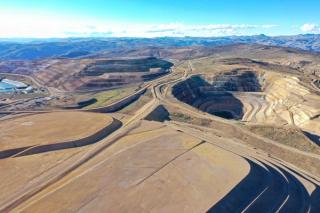
South Africa is globally recognised as a leader in tailings retreatment, and I have been directly involved in retreatment projects since the early 1990s. Over the years, we have hosted numerous large international mining companies that specifically visit the Johannesburg region to observe and learn from local retreatment practices.
In addition, through the Land Rehabilitation Society of Southern Africa, we have hosted the United Nations, welcoming 60 delegates from 20 countries to study tailings retreatment and management first-hand. Techniques, technologies and management systems have evolved significantly over time, as lessons learned have been progressively incorporated into improved processes and standards.
DRDGOLD and Ergo rank among the largest tailings retreatment companies in the world. Over several decades, skills, methods and technologies have matured substantially. A well-known example of effective post-closure planning and asset transition is Gold Reef City, where former tailings infrastructure has been repurposed for tourism, including the development of a major theme park on land once occupied by tailings.
Despite these successes, challenges remain. Informal mining continues to pose social, safety and environmental risks. In the early years, the regulatory framework struggled to accommodate the concept and risks associated with tailings retreatment. However, consistent positive outcomes and tangible benefits have gradually streamlined approval processes.
Environmental and technical challenges encountered on projects range from high carbon content disrupting metallurgical recovery to the discovery of human remains or archaeological artefacts within tailings deposits, each requiring sensitive and carefully managed responses.
Controlling dust and erosion
One of the most effective interventions has been the use of specially installed nets. When applied correctly, these nets significantly reduce dust emissions, create a more favourable microclimate for vegetation establishment and prevent erosion, while also protecting both workers and surrounding communities.
The foremost priority is erosion prevention. Uncontrolled erosion can destabilise tailings facilities and transport material into areas where recovery and relocation become more complex and costly. In addition to recycling and reusing process water, comprehensive water management, particularly erosion control, is critical.
Using nature-based solutions
Wetlands require protection from sediment deposition, but engineered wetlands can also be deliberately designed to treat contaminated water. These systems are capable of neutralising acid rock drainage, removing toxic metals and excess nutrients, while simultaneously providing habitat, increasing biodiversity and capturing carbon.
Effective planning, particularly at a regional level, is essential. Prior to constructing any new tailings storage facilities, extensive landform analyses are undertaken. Typically, an area with a radius of up to 60 km around greater Johannesburg is assessed to identify optimal deposition sites. These sites are evaluated in the context of future land use, integrated development plans and regional growth strategies.
Equally important is the planning of the source material for retreatment, supported by predictive modelling that incorporates gold price forecasts, operational variables and the anticipated impacts of climate change. In many cases, projects require pipeline networks exceeding 50 km in length. Planning is further complicated by the need to factor in post-closure land use objectives and long-term rehabilitation requirements from the outset.
Tailings retreatment is effectively a large-scale clean-up operation followed by ecological rehabilitation. Many projects involve removing historical deposits from wetlands, which are then restored to fully functioning ecosystems that deliver valuable services to both nature and surrounding communities.
The removal of tailings deposited as early as 1888 has significantly improved and restored land within urban areas where space is both economically and socially valuable. Reprocessed tailings are relocated to newly designed tailings storage facilities incorporating the latest pollution control technologies. These include underdrainage systems, concurrent rehabilitation approaches and advanced high-density polyethylene lined facilities.
Ongoing improvements in pollution control, rehabilitation methods and offset technologies have contributed to increasingly sustainable project outcomes with reduced environmental impacts. Advances in seed technology and engineered wetland design further enhance mitigation effectiveness over time.
Successful planning and implementation rely on close collaboration between the engineer of record, design engineers, contractors, environmental teams and closure specialists. Additional expertise, including hydrologists, geochemists and specialist contractors, is required to ensure underdrainage systems function reliably without chemical scaling or flow restrictions.
Stakeholder engagement is integral throughout the process. Communities and regulators must be kept informed and involved, supported by dedicated stakeholder practitioners and independent auditors. Funding bodies, commercial banks and institutions such as the International Finance Corporation often play key roles, each with specific guidelines and compliance requirements that must be audited and adhered to.
The integrated nature of this multi-disciplinary approach ensures that environmental, technical, social and financial considerations are embedded into every stage of planning and execution.
Facilitating alignment between regulators, communities and industry frequently falls to independent environmental practitioners, closure specialists and the engineer of record. Retreatment is generally welcomed due to its clean-up benefits, but residual material must still be safely and responsibly disposed of.
Backfilling underground workings, while widely used, is often limited in capacity. As a result, large tailings storage facility mega-structures are required. These are challenging to site, design and construct. Once locations are agreed, regulators typically recognise the overall benefits of remediation when balanced against unavoidable impacts.
Industry must manage highly complex projects exposed to commodity price volatility and technical risks. Construction involves mega-structures incorporating sensitive pollution control measures, such as plastic liners spanning thousands of hectares. Communities ultimately benefit from the relocation of dust and water pollution sources to facilities that are better sited, engineered and managed.
From early planning stages, stakeholder engagement processes are initiated, and in many cases, projects take decades to progress from concept to construction. Virtually every sector of society becomes involved, positioning South Africa, and Johannesburg in particular, as a global hub of expertise in tailings retreatment. This leadership has attracted international organisations, including the United Nations, eager to learn from both early missteps and long-term successes.
The future of sustainable mine closure and land rehabilitation is promising, provided innovation and knowledge-sharing continue. Advancements include improved seed technologies, bacterial inoculation to enhance germination, the use of captured smoke-derived chemicals to stimulate growth, and ongoing enhancements to geosynthetic liners, nets and soil amelioration techniques.
Rehabilitation efforts reached a peak in the 1980s, driven by initiatives such as the Chamber of Mines Vegetation Unit and strong industry-wide collaboration. While momentum declined in subsequent decades due to regulatory and economic factors, renewed global interest in biodiversity, ecosystem restoration and carbon markets is revitalising the field.
As these drivers converge, tailings retreatment and land rehabilitation are once again emerging as critical components of responsible and sustainable mining practice.
If you have any questions about tailings retreatment, closure planning, or what these evolving practices mean for your projects, please contact us today.
Get in touch